
What to Do If Your Child Needs Stronger Glasses Every Year
For some children, a stronger prescription is not a one-time change. It becomes a pattern that continues from one year to the next. Myopia management is used to slow that progression and follow it more carefully over time.

Nearsightedness Is About More Than Glasses
Myopia is not only about seeing clearly at a distance. It reflects how the eye is growing. As the eye continues to grow, distance vision becomes blurrier, and the prescription increases to compensate. That change can continue through childhood and adolescence. The concern is not just that glasses become stronger. It is that the eye itself may keep changing over time. Myopia management in Carson City is meant to guide that process, not simply react to it year after year.
Myopia Symptoms Parents Often Notice
Parents usually see the pattern before they know what it means. Common signs include:
-
Glasses prescriptions are changing year after year
-
Trouble seeing clearly at a distance
-
Sitting closer to screens or books
-
Squinting to bring things into focus
-
Comments from the school about difficulty seeing the board
These signs do not automatically mean treatment is needed, but they often mean it is time to look more closely at how vision is changing.
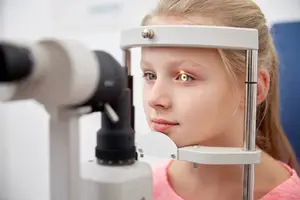
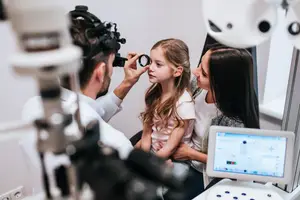
Reasons to Start Myopia Management Early
A child does not need to wait for several large prescription changes before this is considered.
Myopia management is often discussed once it becomes clear that the prescription is continuing to increase. Starting earlier can make it easier to slow that pattern while the eyes are still developing.
The goal is not to reverse myopia. It is to slow its progression and to bring greater consistency to how it is monitored.
Care Options Based on How Your Child’s Eyes Are Changing
There is not one option that fits every child.
Some children do well with low-dose atropine. Others may be better candidates for multifocal contact lenses. The choice depends on age, prescription history, how quickly the vision has been changing, and how the child is likely to respond to treatment over time.
The point is not to follow a standard plan. It is to choose an approach that makes sense for how your child’s eyes are actually progressing.
Low-dose atropine is a daily eye drop. It is prescribed to slow myopia progression in children. It is used when a child’s prescription increases over time.
The drop is not used to replace glasses. Its role is to determine how quickly the prescription changes. For many families, this is a simpler first step, since it does not require contact lenses.
It still needs follow-up, though, because the response has to be watched over time.
Multifocal soft contact lenses can also help manage myopia progression.
They do more than sharpen distance vision. They also affect how the eye focuses. This can help guide visual development as the eye grows.
They are not the right fit for every child. Whether they make sense depends on the child’s age, comfort with contacts, and how their myopia is progressing.
In the right situation, they can be a useful part of long-term management.
Book an Appointment to Track Your Child’s Vision Progression
One visit is not enough to know whether progression is slowing. Follow-up matters because it shows whether the prescription is continuing to increase, holding steady, or changing in a different way than expected. That is what allows optometrists at Advanced Sierra Eyecare to adjust treatment based on what is actually happening, rather than assumptions.