
Eye Disease Management in Carson City, NV
Eye disease management is about more than treating a diagnosis—it’s about preserving your vision through early detection, advanced diagnostics, and long-term monitoring.
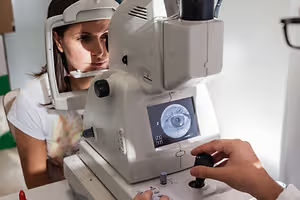
At Advanced Sierra Eyecare, we use technologies such as OCT imaging and visual field testing to identify subtle changes early and guide personalized treatment plans that help protect your long-term eye health.
When Your Eye Health Needs Ongoing Medical Care
Some eye conditions can be resolved in a single visit, while others require ongoing monitoring and long-term medical management. Whether you have an existing diagnosis or you're experiencing unexplained changes in your vision, our goal is to understand the cause, monitor progression, and provide the care needed to help preserve your sight.
Eye Conditions We Monitor & Manage
Our medical eye care services focus on diagnosing, monitoring, and managing conditions that can change gradually over time and benefit from regular follow-up and advanced diagnostic testing.
Certain eye conditions develop slowly and do not always cause symptoms early on. Ongoing care allows changes to be identified, followed, and managed over time rather than addressed in a single visit.
Glaucoma affects the optic nerve and often progresses without noticeable symptoms in its early stages. Management is focused on monitoring changes and maintaining a stable vision over time.
Common signs may include:
-
Gradual loss of peripheral (side) vision
-
Difficulty seeing in low light
-
Vision that feels narrower or less complete
-
Often no noticeable symptoms in the early stages
Macular degeneration affects central vision and can make tasks like reading or recognizing faces more difficult as it progresses. Regular monitoring helps detect changes early and guide care.
Common signs may include:
-
Blurred or distorted central vision
-
Difficulty reading or seeing fine detail
-
Straight lines appear wavy
-
Dark or empty areas in central vision
Diabetes can affect the blood vessels in the retina, sometimes before vision changes are noticeable. Ongoing exams help track these changes and reduce the risk of vision loss.
Common signs may include:
-
Vision that fluctuates or changes frequently
-
Blurred vision
-
Dark spots or floaters
-
Often no symptoms in the early stages
Dry eye affects the surface of the eye and can make vision inconsistent and uncomfortable. Management focuses on improving the quality of the tear film and reducing irritation.
Common signs may include:
-
Dryness or a gritty sensation
-
Burning or stinging
-
Fluctuating or blurry vision
-
Eye fatigue, especially with screen use
Blepharitis is inflammation along the eyelid margins and can affect tear quality and comfort. It often requires ongoing care to keep symptoms controlled.
Common signs may include:
-
Red or irritated eyelids
-
Crusting along the lash line
-
Burning or itching
-
Watery or irritated eyes

Advanced Glaucoma Management in Carson City
Glaucoma is often called the "silent thief of sight" because it can progress without noticeable symptoms.
Managing glaucoma requires more than measuring eye pressure. We use advanced technologies, including OCT imaging and visual field analysis, to monitor changes in the optic nerve and evaluate how your vision is functioning over time.
As one of the few optometrists in Nevada credentialed to manage glaucoma, Dr. Benjamin Seljestad provides ongoing medical care focused on early intervention, careful monitoring, and treatment adjustments as your condition changes.
Coordinated Surgical Co-Management
some eye conditions eventually require surgical treatment. When that happens, we work closely with ophthalmologists and surgical centers to provide seamless care before and after surgery.
From pre-operative evaluations to post-operative monitoring, we remain involved throughout your treatment to ensure continuity of care, monitor healing, and support your long-term visual outcomes.
Take the Next Step if You’ve Noticed Changes
If you have been told to follow a condition, or if something about your vision has changed over time, it can help to have it evaluated more closely. You can contact our eye clinic in Carson City to arrange a visit for an eye exam or find a time that works for you.